
Knee pain slowing you down? Learn when knee replacement may be right for you and how robotic surgery can help you get back to living fully.
Knee arthritis often develops gradually. Many patients live with symptoms for years before realizing their joint has reached a point where surgical treatment may provide the most reliable relief.
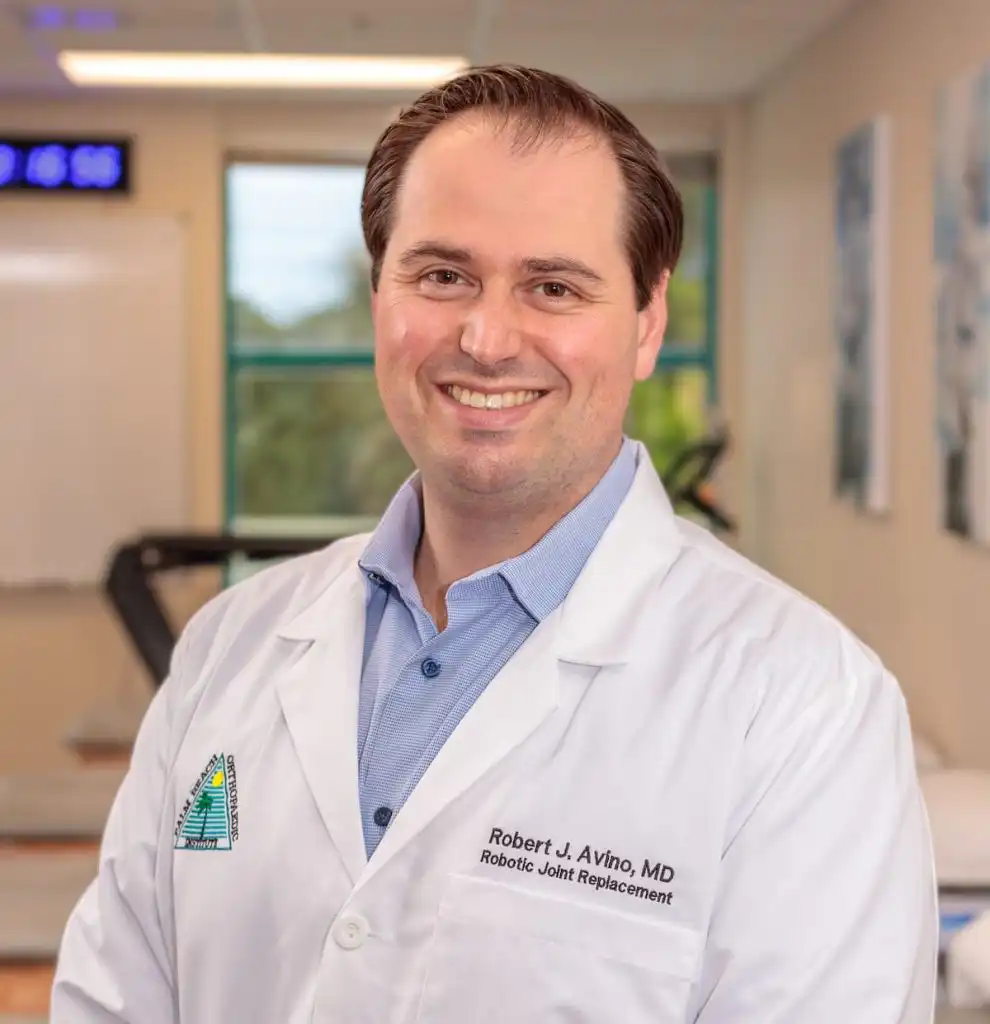
Robert J. Avino, M.D., a board-certified, fellowship-trained orthopedic surgeon who has performed over 1,400 robotic-assisted hip and knee replacements, focuses on helping patients understand when conservative care no longer works — and what comes next.

Understanding Knee Arthritis
The most common reason patients require knee replacement surgery is osteoarthritis — a condition in which the cartilage that cushions the joint gradually wears away. Cartilage normally allows the knee to move smoothly during walking, bending, and weight-bearing activity. As it deteriorates, the joint surfaces may begin to rub directly against one another, leading to pain, stiffness, inflammation, swelling, and reduced range of motion. Over time, these changes can significantly affect daily mobility and quality of life.
Signs That Knee Arthritis May Be Progressing
Patients often begin to consider knee replacement when arthritis starts interfering with everyday life. Common symptoms of advanced knee arthritis include persistent pain during activity or at rest, increasing stiffness, difficulty walking longer distances, pain when climbing stairs, limited ability to bend or straighten the knee, and reduced participation in exercise or recreational activity. These symptoms often worsen gradually as cartilage loss continues.
When Non-Surgical Treatments Are No Longer Effective
Many patients attempt conservative treatments before considering surgery. Common non-surgical options include anti-inflammatory medications, physical therapy, cortisone or other joint injections, and activity modification. While these treatments may temporarily relieve symptoms, they do not reverse cartilage loss. When arthritis continues to progress despite these measures, surgical treatment may be the most effective next step.
What “Bone-on-Bone” Knee Arthritis Means
A term frequently used in discussions of advanced knee arthritis is bone-on-bone degeneration. This occurs when the protective cartilage has worn away to the point that the bones of the knee make direct contact during movement. At this stage, patients may experience increased pain, reduced stability, loss of smooth joint motion, and progressive joint deformity. Knee replacement surgery is often the most reliable method of restoring joint mechanics when the joint has reached this point.
How Knee Replacement Surgery Restores Joint Function
Knee replacement surgery replaces the damaged joint surfaces with medical implants designed to restore smooth movement and proper knee alignment. The surgeon removes the worn cartilage and damaged bone and replaces them with precisely fitted implants. Modern knee replacement implants are designed to allow the knee to move smoothly during walking, standing, and daily activities. For many patients with advanced arthritis, knee replacement may significantly improve mobility and quality of life.
Robotic-Assisted Knee Replacement with Mako Technology
Advances in surgical technology have changed how knee replacement procedures are planned and performed. Dr. Avino performs robotic-assisted knee replacement using Mako robotic-arm technology, which allows the procedure to be planned based on a three-dimensional model of the patient’s knee anatomy. This helps guide implant positioning and joint alignment during surgery, tailoring the procedure to each patient rather than relying on a one-size-fits-all approach.
With over 1,400 robotic-assisted joint replacements performed, Dr. Avino brings extensive Mako experience to every procedure.
What to Expect During a Consultation
Patients considering knee replacement often benefit from consulting an orthopedic surgeon specializing in joint replacement. During a consultation with Dr. Avino, the knee joint is evaluated through a review of symptoms, a physical examination, imaging studies such as X-rays, and an open discussion of all treatment options — both surgical and non-surgical. This evaluation helps determine whether knee replacement may be appropriate based on the condition of the joint and the patient’s individual goals.
Schedule a Consultation with
Dr. Avino
Robert J. Avino, M.D., is a board-certified, fellowship-trained orthopedic surgeon with over 1,400 robotic-assisted hip and knee replacements performed. He serves patients throughout Palm Beach County, including Palm Beach Gardens, Jupiter, Wellington, and the surrounding communities.
Request a consultation online using our contact form, or call Palm Beach Orthopedic Institute and ask for Dr. Robert J. Avino when scheduling an appointment.
Schedule a Consultation Today
If hip or knee pain is slowing you down, don’t wait. Request a consultation online or call
Palm Beach Orthopedic Institute and ask for Dr. Robert J. Avino.