
What happens after robotic knee replacement? Learn what recovery may look like week by week, from your first days home through returning to daily activities.
Robotic knee replacement can help relieve the pain and stiffness of arthritis and get you moving again, but the surgery itself is only part of the journey. What you do in the weeks that follow plays a major role in how well you recover. Knowing what to expect can help you feel prepared, stay motivated, and approach each stage with confidence.
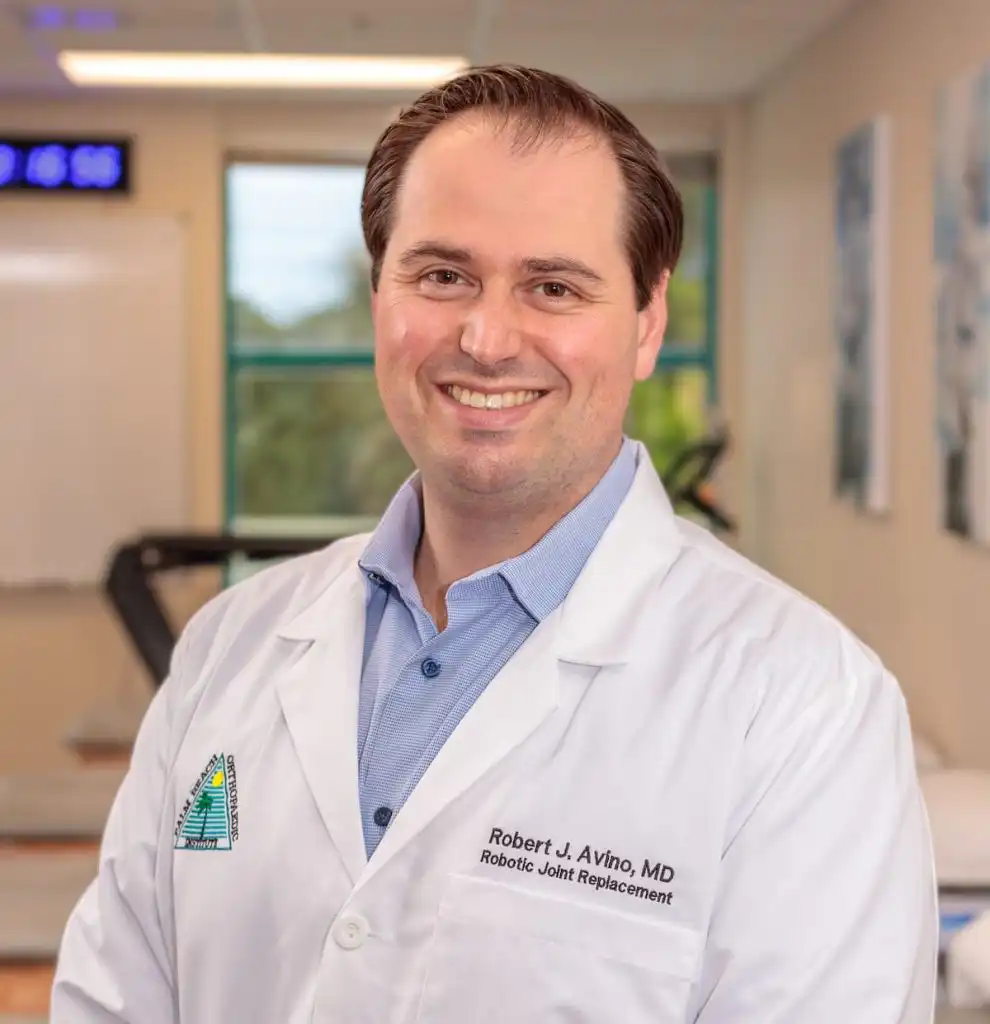
If you are considering robotic knee replacement in Palm Beach County, Robert J. Avino, M.D., a board-certified, fellowship-trained orthopedic surgeon, can walk you through what recovery may look like in your case. To request a consultation, complete our online contact form or call (561) 694-7776 and ask for Dr. Avino.

What The First Days At Home Look Like
Many patients can go home the day of surgery or shortly after, though eligibility depends on your health and individual circumstances. In these first days, the focus is on rest, managing discomfort, and beginning to move. You will likely use a walker or crutches at first, and you may feel swelling, bruising, and soreness around the knee. This is a normal part of healing.
Your care team will guide you through pain management, wound care, and gentle exercises to help you regain mobility. Getting up to move at regular intervals, even briefly, supports circulation and helps prevent stiffness. Applying ice and keeping the leg elevated can help control swelling.
Recovery Weeks One to Two
During the first two weeks, physical therapy becomes central to your recovery. A therapist will help you work on bending and straightening the knee, building strength, and walking with more confidence. These early exercises may feel challenging, but consistency is what moves you forward.
Many patients begin to shift from a walker to a cane during this period, though timing varies. You may notice that everyday tasks, such as getting in and out of a chair or moving around the house, gradually become easier. Swelling is still common, and continuing to ice and elevate the leg remains helpful. This is also when you will typically have a follow-up visit so your surgeon can check your incision and monitor your progress.
Recovery Weeks Three to Four
By the third and fourth weeks, many patients feel noticeably stronger and more mobile. Pain often continues to ease, and you may find yourself relying less on assistive devices. Physical therapy continues, focusing on increasing your range of motion and rebuilding the muscles that support your knee.
Some patients are cleared to return to driving during this stage, once they can move safely and are no longer taking medications that affect alertness. Your surgeon and care team will let you know when this step is appropriate for you. Many people also begin returning to light daily activities and short outings around this time.
Recovery Weeks Five to Six
Around the six-week mark, many patients reach a meaningful turning point. Walking often feels more natural, strength continues to build, and daily life starts to feel more familiar. You may still have some swelling and stiffness, especially later in the day or after activity, and that is to be expected as healing continues.
Physical therapy may shift toward more advanced strengthening and balance work. Your surgeon may discuss easing back into activities you enjoy, always within the limits appropriate for your recovery.
Recovery Beyond Six Weeks
Recovery does not stop at six weeks. Many patients continue to gain strength, motion, and comfort over the following months. Low-impact activities such as walking, swimming, and cycling are often encouraged as you progress, and your care team can guide you on when and how to return to the things you love. Full recovery can take several months to a year, with improvements often continuing well into that period.
Throughout this time, staying consistent with your exercises, attending your follow-up appointments, and communicating with your care team all support a smoother recovery.
Tips For A Smoother Recovery
A few habits can make a difference along the way. Stay committed to your physical therapy, even on days when progress feels slow. Keep up with your prescribed exercises at home. Manage swelling with ice and elevation. Eat well and stay hydrated to support healing. And reach out to your care team promptly if you have concerns, such as increasing redness, warmth, or unusual pain.
Robotic knee replacement is designed with precision in mind, using a detailed plan of your anatomy to guide implant placement. For many patients, that careful planning supports a more comfortable recovery. Still, your effort and your care team’s guidance remain essential to a good outcome.
Consider Contacting Us Today
If you are exploring robotic knee replacement in Palm Beach County, Robert J. Avino, M.D., is here to help. Dr. Avino is a board-certified, fellowship-trained orthopedic surgeon who specializes in robotic-assisted hip and knee replacements at Palm Beach Orthopedic Institute in Palm Beach Gardens, and he has performed more than 1,000 such procedures.
To request a consultation, fill out our online contact form and a member of the team will follow up with you. You can also call (561) 694-7776 and ask for Dr. Avino.
Schedule a Consultation Today
If hip or knee pain is slowing you down, don’t wait. Request a consultation online or call
Palm Beach Orthopedic Institute and ask for Dr. Robert J. Avino.