
If knee pain has started to interfere with the things you enjoy — golf, gardening, keeping up with grandkids — scheduling a consultation is often the first real step toward getting answers.
For many patients, this visit is less intimidating than they expect. It’s a chance to be heard, get a clear picture of what’s going on, and understand what options actually make sense for you.

Why the Consultation Matters
A knee replacement consultation isn’t just a formality before surgery. For many patients, it’s where the real decision-making happens. This visit typically determines whether knee replacement is appropriate now, whether non-surgical options are still worth trying, or whether a different treatment path makes more sense for your specific situation. It’s also your opportunity to ask questions and get comfortable with your surgeon before committing to anything.
Reviewing Your History and Symptoms
Expect the visit to start with a conversation about your knee pain — when it started, what makes it better or worse, and how it’s affecting your daily life. Your surgeon will also want to understand your overall health history, prior treatments you’ve tried, and any other conditions that could factor into surgical planning. Being specific here helps: mentioning that stairs are painful, or that you’ve had to give up pickleball, gives your care team a clearer sense of your goals.
Imaging and Physical Examination
Most consultations include a physical exam to assess your knee’s range of motion, stability, and areas of tenderness. If you don’t already have recent imaging, X-rays are typically taken at this visit to evaluate the extent of arthritis or joint damage. This imaging plays a key role in determining candidacy for surgery and, later, in planning a robotic-assisted procedure tailored to your anatomy.
Discussing Treatment Options
Not every patient walks out of a consultation scheduled for surgery — and that’s by design. Many patients are appropriate candidates for conservative treatments first, such as physical therapy, anti-inflammatory medication, or injections. If your knee has progressed to the point where these options are no longer providing meaningful relief, your surgeon can walk you through what robotic-assisted knee replacement involves, including how the Mako system is used to plan and guide the procedure around your specific anatomy.
Questions Worth Asking
Consultations tend to go better when patients come prepared. Questions many patients find helpful include:
- What does recovery typically look like for someone in my situation?
- How many robotic-assisted knee replacements have you performed?
- Am I a candidate for a same-day or outpatient procedure?
- What are the risks and how are they managed?
- What can I do now to prepare, if surgery is recommended?
There’s no such thing as a question that’s too basic. A good consultation should leave you with clarity, not more uncertainty.
What Happens Next
If knee replacement is recommended and you decide to move forward, the next steps typically include pre-operative testing, a discussion of surgical planning using 3D imaging, and guidance on how to prepare your home and schedule for recovery. If you’re not quite ready, that’s fine too — many patients take time to consider their options before scheduling surgery.
Take the First Step
A consultation is simply a conversation — one that can bring a lot of clarity to a decision that might feel overwhelming from the outside. If knee pain is holding you back from the activities you love, it may be time to find out what your options really are.
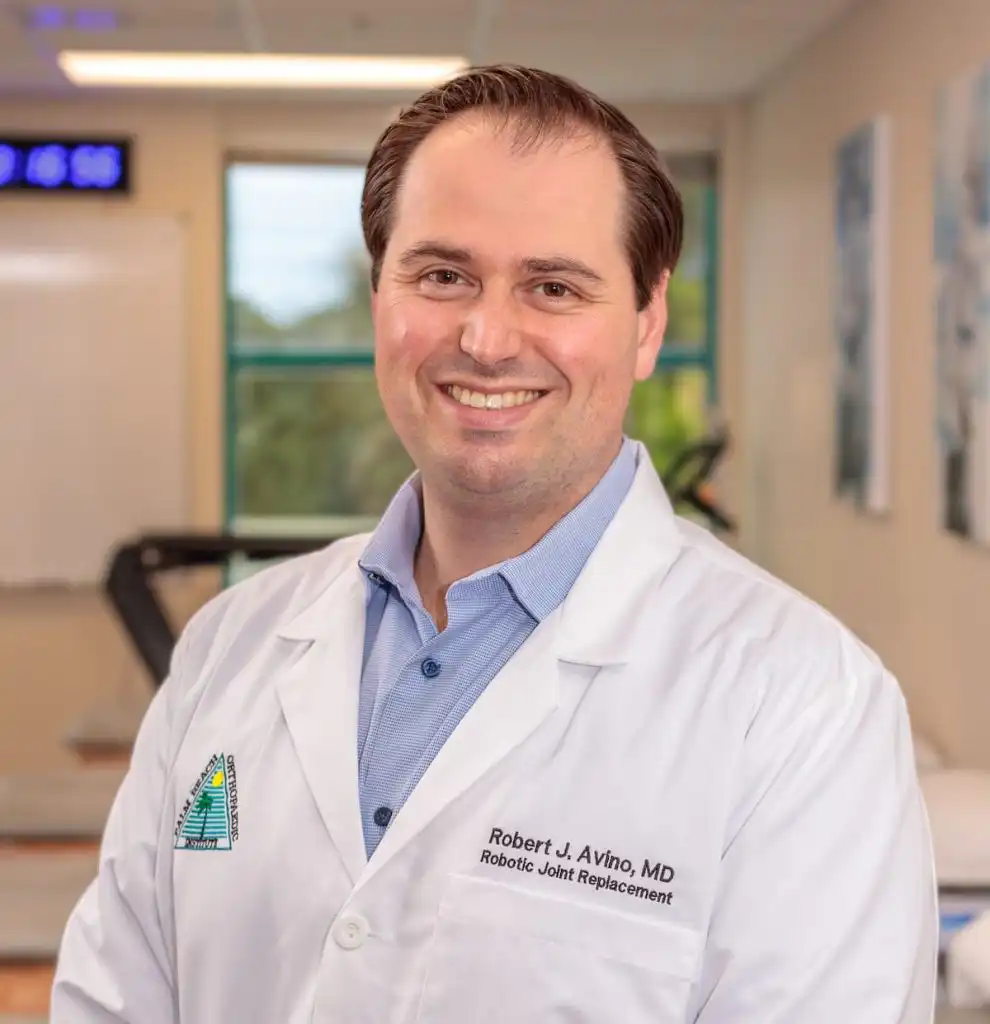
You can request an appointment through the website form or call to schedule a consultation with Dr. Avino.
Schedule a Consultation Today
If hip or knee pain is slowing you down, don’t wait. Request a consultation online or call
Palm Beach Orthopedic Institute and ask for Dr. Robert J. Avino.